
Specialist excavation · Central London

Powerful air.
A lighter touch.

Careful work. Confined spaces.
Ground worth protecting.

Air excavation and impact moling, with compact compressors for narrow passages, garden gates and sites where access demands a different approach.

01 / Built for the spaces between London.
Below the surface See the method
Air excavation: revealing the roots Soil is progressively removed to reveal intact roots. This is an illustrative cutaway, not a work plan.

Illustrative cutaway · not to scale

Roots revealed, intact.

Soil is removed; the root structure stays in place.

Air excavation reveals roots by progressively removing the surrounding soil.

01 Equipment that fits

02 Ground carefully assessed

03 Protection planned in

The London access problem

Small entrance.
Proper capability.

A tight side passage shouldn’t be the end of the conversation.

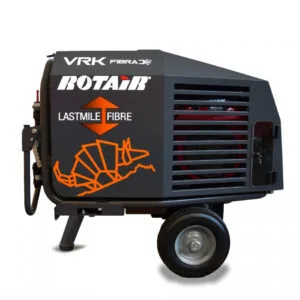
London’s courtyards, garden squares and historic properties demand careful work in confined spaces. Our fleet includes compact, single-tool compressors alongside larger equipment, so we can match the air supply and access arrangements to your project.

Where a road-towable unit cannot enter, our smaller equipment can open up practical options. We check the full route: gate widths, corners, steps and the working area beyond.

Tell us about your access
THE RIGHT TOOL FOR THE SITE
Compact wheeled single-tool compressor featured by GardenSqua.re
Clear opening measured on site
Compact single-tool options

Airflow, tool demand and access checked together. Final equipment selection is specific to your job.

Three ways to work with the ground

Less disruption.
More possibility.

Reveal the roots. Pass beneath the paving. Open up compacted soil. See how each method works, then explore the right approach for your site.

01AIRTOOLS SERVICE

Air excavation

Air excavation: revealing the roots Soil is progressively removed to reveal intact roots. This is an illustrative cutaway, not a work plan.

Roots revealed, intact.

Reveal the roots. Respect what stays.

Air spades and lances loosen and remove soil around roots and buried services, reducing reliance on cutting or striking tools. Compact compressors help us reach confined London sites.

Explore air excavation
02AIRTOOLS SERVICE

Impact moling

Impact moling: beneath the paving A mole connects two access pits below intact paving. This is an illustrative cutaway, not a work plan.

Across, without an open trench.

Connect below. Preserve above.

A pneumatic mole creates a straight route for pipes or ducts between two access pits. On suitable ground, paving and landscaping can stay in place above the route.

Explore impact moling

03SPECIALIST REFERRAL

Soil care

Soil care: open, then fill A first pulse opens fissures. A second fills them with treatment material. This is an illustrative cutaway, not a work plan.

New pathways through the soil.

Open the soil. Create new pathways.

A first air pulse opens fissures in compacted soil; a second introduces treatment material. We connect you with an independent specialist to assess suitability and deliver soil decompaction.

Explore soil care

Tree protection, made visible

There’s more to a tree
than its canopy.

Understand the ground before you disturb it. Explore the roots, the protection area and the extra care needed near existing infrastructure.

Side view · roots beneath the surface
A tree above and below groundAn illustrative tree has broad, shallow branching roots extending beyond the canopy. Dashed lines project the canopy edge onto the ground. 1.5 m

Schematic root system. Depth and spread vary.

RootsCanopy / drip line

01 / ABOVE & BELOW GROUND

The canopy is not a root map.

The drip line follows the outer edge of the canopy. Roots often extend beyond it, with much of the root system in the upper 600 mm of soil.

A pruned crown does not mean a small root system. Neither the drip line nor an RPA boundary marks where every root ends.

Source: Street Works UK 2026, §1.1 ↗

Illustrative explanation · not a tree survey or permission to excavate.

Read the zones together

Different guidance.
The same tree.

BS 5837 informs development design; NJUG / Street Works UK addresses utility works. One does not cancel the other.

BS 5837 and current NJUG / Street Works UK guidance
FrameworkStarting pointWhat it means on site
BS 5837:2012Stem-based RPA, then assessed against the site.Plan protection, access and any justified works with the project arboriculturist.
SWUK prohibited zone1 m from the trunk.No excavation without full arboricultural consultation; no storage. Mechanical open trenching is prohibited.
SWUK precautionary zone4 × stem girth.Agree the method. The 2026 handout excludes mechanical excavation other than vacuum excavation.
Outside the SWUK zoneCalled “permitted” in the guidance.Continue cautiously and protect roots. This is not a guarantee of root-free ground.
Ancient trees, protected trees and other important distinctions

For ancient and veteran trees, Natural England and the Forestry Commission recommend a buffer of at least 15 × stem diameter, or 5 m beyond the canopy if larger. Do not apply the ordinary 15 m calculation cap to that separate advice.

In England, TPO protection includes roots. Conservation-area notifications, planning conditions and applicable exceptions also need checking. Standards and industry guidance do not replace consent or the agreed tree protection plan.

Air excavation can help investigate roots; it does not itself authorise work in a protected area. A suitable method, root care and supervision remain part of the job.

Planning work near established trees?
Let’s start with the site and its constraints.

Discuss your site

Grounded in garden-square experience

London is
our working ground.

As part of London Infrastructure Solutions, airtools.london shares GardenSqua.re’s practical understanding of communal gardens, mature trees and sensitive infrastructure.

That perspective shapes how we approach your site, from the gate we enter through to the ground we leave behind.

Explore GardenSqua.re
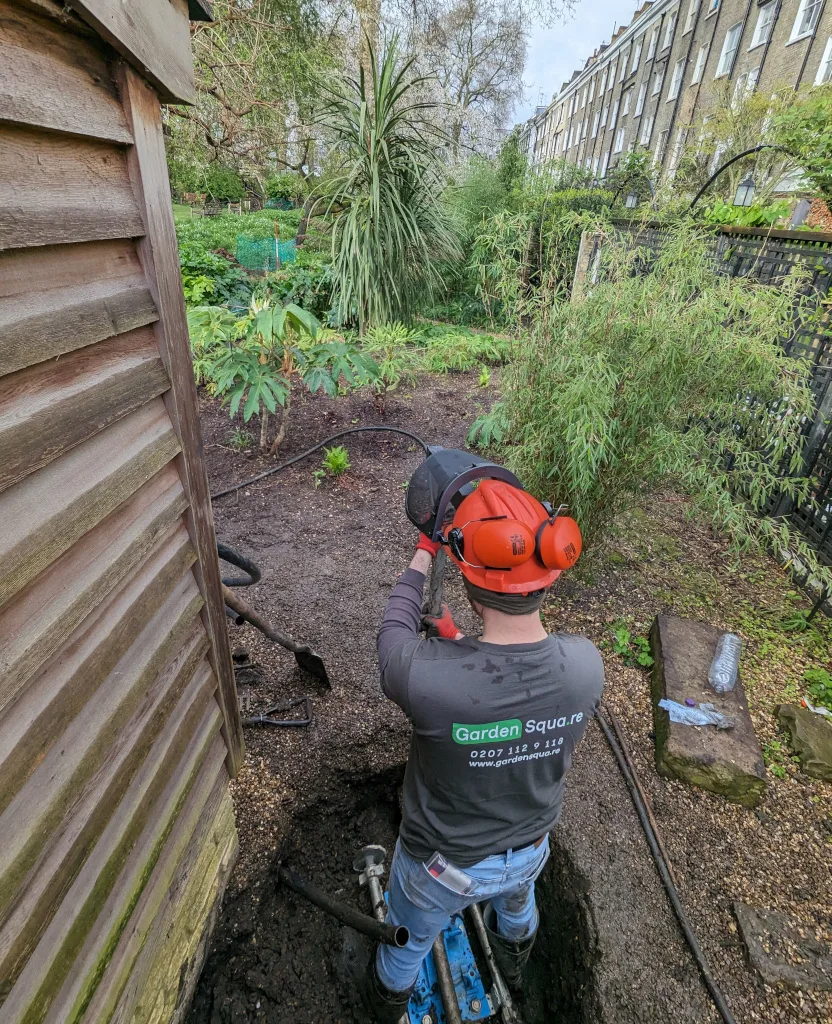
GardenSqua.re operative working in a narrow garden excavation beside a timber building
FROM THE GARDENSQUA.RE TEAMCareful work in confined London gardens.
→

For garden committees, estate managers, homeowners, arboricultural consultants and contractors.

Central London focus.
Site-specific planning.
Practical equipment choices.

From enquiry to excavation

Start with the site.

Choosing the method comes after understanding the ground.

  1. 01

    Understand

    Share the postcode, proposed works, clear access width and any plans or tree constraints.

  2. 02

    Assess

    We consider access, ground conditions, known services and the need for further investigation.

  3. 03

    Plan

    Agree the method, equipment, protection measures and scope before work starts.

  4. 04

    Deliver

    Carry out the agreed work. For soil decompaction, your independent specialist manages delivery.

A practical next step

Tell us what’s
under way.

A narrow gate? Established trees? Services beneath your path? Tell us what you need to achieve and what makes the site challenging.

Useful details include the clear gate width, steps, tight turns and any tree protection requirements.

020 7112 9118 ↗Central London · Homes, gardens & estates

We’ll use these details to answer your enquiry. No mailing list. Read our privacy notice. Please keep sensitive information out of the form.

Have photos or a site plan? Mention them and we’ll arrange the best way to share.