Let the soil breathe.
Opening compacted ground can improve the movement of air through soil, supporting the oxygen supply roots need.
Tree care · Soil injection · Central London
Give compacted roots more room for air, water and life.
From garden squares to private gardens, years of footfall and machinery can squeeze the life out of the soil. Specialist air injection offers a targeted way to improve the growing conditions around established trees.
Assessed and delivered by an independent soil-care specialist.
New pathways through the soil.
Illustrative two-stage treatment. Material injection is used only where appropriate.
Look after the roots. Look after the tree.
Compaction reduces the pore space roots depend on. Repeated foot traffic, events and maintenance vehicles can leave apparently healthy green space with a difficult growing environment underneath.
Opening compacted ground can improve the movement of air through soil, supporting the oxygen supply roots need.
A more open structure can help rain enter and move through the soil, instead of collecting at the surface.
Reducing physical resistance can give fine roots a better environment to explore for water and nutrients.
A lesson from Kew Gardens
The Turner’s Oak story shows why caring for a tree means caring for the soil beneath it.
During the Great Storm of 1987, the tree’s root plate lifted and then settled back. Its subsequent recovery helped Kew recognise the impact of compaction and make decompaction part of its care for mature trees.
Watch Tony Kirkham explain the lesson in this BBC World Service film.
Read Kew’s account ↗An independent educational example from Kew, not an AirTools project or a prediction for every tree.
YouTube loads only when you choose to load the video. Google then receives connection data and may use cookies. Video privacy
How soil injection works
A slender probe delivers compressed air below the surface. Where the assessment calls for it, porous material is then introduced into the opened fissures. The depth, spacing and treatment are chosen for your site.
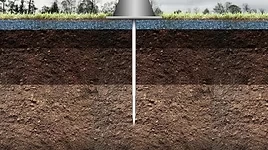
Treatment points and depth are selected around the roots, services and soil conditions.
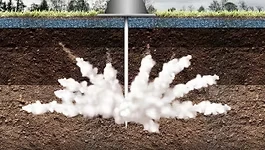
A controlled air pulse creates fissures within the compacted ground.
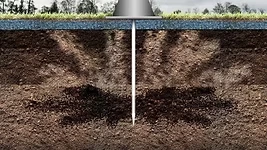
The opened structure gives air and water more routes through the root environment.
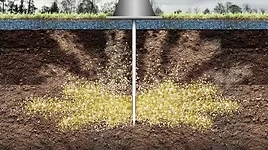
Where specified, a second stage carries suitable material into the fissures.
Process illustrations reused from GardenSqua.re. Simplified sequence, not to scale.
YouTube loads only when you choose to load the video. Google then receives connection data and may use cookies. Video privacy
See the technique in action
The work happens below the surface, with local treatment points rather than stripping out the whole root zone.
This manufacturer’s demonstration shows air-assisted aeration and injection. It helps explain the technique; your specialist will confirm which equipment and treatment suit your trees and ground.
Ask about your site ↗More than a burst of air
Air injection and material injection do different jobs. Where an infill is appropriate, the specialist selects it to suit the soil, the tree and the intended improvement.
A porous, carbon-rich material that can help retain water and nutrients and provide habitat for soil microbes. Its properties vary, so the product, soil pH and application rate matter.
RHS guide to biochar ↗Materials such as Terramol, a calcined moler-clay granulate, can be introduced into fissures to help maintain open pathways. The specification should follow the ground assessment.
GardenSqua.re’s soil-injection guide ↗Tree care, beyond the treatment
A healthier root environment is worth protecting. Treatment works best as part of a plan for how the space will be used and cared for.
For trees affected by construction or proposed works, the treatment must also fit the tree protection plan.
Understand tree protection areas ↗Your soil-care questions
It may help where compaction is a contributing factor. A thinning canopy, small leaves or poor growth can also have other causes. An arboricultural assessment should guide decisions about a declining tree, including whether it is safe to retain.
Not necessarily. Improving soil structure may help infiltration, but a high water table, impermeable layers or drainage defects need their own assessment. The aim here is a better root environment, with drainage benefits where conditions allow.
Treatment points, pressure, depth and materials must be selected for the site. Existing services need to be located and tree constraints understood before inserting a probe. Specialist air injection is a controlled method, not permission to work blindly around roots or utilities.
Tell us the narrowest clear access width, steps and tight turns. Our excavation fleet includes compact compressors, but a soil-injection referral uses the specialist’s own equipment. We check the proposed access with them before arrangements are made.
An independent soil-care specialist. We handle your initial enquiry and ask before sharing it. The specialist assesses suitability, agrees the treatment and price with you, and delivers the work.
Central London · Specialist ground works